Blog
What a real slow travel holiday looks like
The sound of the alarm at the end of a year's holiday often greets us with the very same heaviness and exhaustion we were trying to escape. Instead of recharged batteries, a clear mind and a sense of inner peace, we often return from our travels with mild muscle soreness, memory cards full to the brim, and chronic fatigue. We unconsciously carry our life at full speed over into our days off: juggling packed schedules, racing against time between journeys, and constantly ticking off 'tick-box' destinations from pre-planned lists has usurped the primacy of a genuine, authentic break.
When a holiday becomes just another project to be successfully completed, the magic of spontaneity is lost. Constantly moving from one location to another prevents us from truly experiencing the space we are in. We become mere observers in passing, instead of allowing our surroundings to relax and rejuvenate us.It was in direct reaction to this mass, rushed tourism that a philosophy emerged which fundamentally changes the way we experience our leisure time – the slow travel holiday. It is an approach that invites us to slow our pace, take a deep breath, and replace the quantity of places we visit with the depth and quality of the experience itself.
Why everyone is talking about slow travel
The reason why slow travel holidays have become a global movement lies in the simple fact that the modern person is to the point of saturation with speed, stimuli and the constant race against time. Most traditional holidays today end with us needing a serious recovery from the journey itself. Overpacked schedules, constantly packing and unpacking, driving from one tourist attraction to another, and the pressure to see absolutely everything in the guidebooks create an internal tension that is the complete opposite of the idea of a holiday.
A slow travel holiday offers a much-needed answer and release from that pressure. Its fundamental principle is extremely simple: fewer destinations, but more authentic, profound experiences. Instead of superficially visiting ten different cities in a week, slow travel encourages you to choose one place, put down roots for a few days or weeks, and allow that environment to gradually shape and relax you.
When you stop chasing other people's lists of attractions, space opens up for unexpected, authentic moments. You free yourself from the stress of a schedule and allow the day to flow naturally. This is why slow travel isn't just a style of travel; it's a conscious decision to put your own health, peace, and inner balance first. Instead of collecting photos in front of famous monuments, you start to collect feelings, smells, tastes and conversations that stay etched in your memory for years to come.
What is slow travel?
At its core, a slow travel holiday is about a journey focused on authentic experience, a natural rhythm, and a genuine connection with the surroundings, rather than ticking off sights and attractions. It is a deliberate departure from the concept where the value of a holiday is measured by the number of kilometres travelled or the number of photographs taken.
The roots of this movement are deeply intertwined with the philosophies of slow food and slow living. The story of slowing down began in the 1980s in Italy, when the slow food movement was created as a protest against the opening of fast-food chains in the historic city centres and as a plea to preserve local culinary traditions, enjoy a meal, and respect local produce. Soon, this idea spread to all spheres of life, shaping the slow living movement which promotes mindfulness, presence in the moment and slowing down the pace of everyday life.
Transposed into the realm of tourism, this philosophy suggests that the goal of travel is not merely to reach a destination, but the journey itself and a deep immersion in the local culture, nature, and way of life. Slow travel teaches us how to become observers again, rather than mere consumers of tourist attractions. Instead of observing the world through a coach or car window, the slow traveller chooses to get around on their own two feet or by pedalling, listens to the soundscape of nature, and aligns their daily rhythm with the sunlight and local customs.
The key principles of a true slow travel holiday
To experience all the benefits that a slow travel holiday offers, it is not enough to simply change the destination – you also need to change your internal attitude towards travel. There are several key principles that guide this transformative holiday philosophy.
1. Stay in one place for longer instead of collecting destinations
A fundamental rule of slowing down is to reduce your range. Instead of changing accommodation every other night, choose one quality base and stay there for the duration of your holiday. A longer stay in one location allows you to stop being a mere passer-by and become part of the temporary neighbourhood. After just a few days, you start to notice details that passers-by miss – where the locals go for their morning coffee, how the scent of the air changes at dusk, and where the most beautiful, undiscovered corners of the area are hidden.2. Choose accommodation in nature and get in tune with the local rhythm
The type of accommodation plays a crucial role in creating a slow holiday. Large, uniform hotel complexes often isolate you from the natural environment, creating an artificial bubble. On the other hand, accommodation situated directly in nature, such as eco-campsites, log cabins or landscaped green oases, allows for immediate contact with the earth, the trees and the sea. When you are woken up by the sound of birdsong or the rustling of waves instead of an alarm clock, your body automatically switches into a state of relaxation and embraces the natural rhythm of your surroundings.
3. Travel slower and organise less, experience more
Leave cars and public transport behind whenever possible. Walking and cycling are not only environmentally friendly ways to get around, but also the best tools for slowing your mind. When you move at the pace of your own step, you notice textures, the flowers by the roadside, the scent of pine and the sounds that go unnoticed when you're rushing by. Additionally, ditch the strict schedule. Leave your days open for spontaneity. Allow yourself to stray from the beaten path, sit on a bench and read for hours, or simply watch the sunset without rushing off to dinner.
4. Digital detox – fewer screens, more presence
It's impossible to experience a true slow travel holiday if your eyes are constantly fixed on your smartphone screen. Constantly checking emails, social media notifications, and the need to document and share every moment with others keeps our nervous system on high alert. Turning off notifications or putting your device away for a few hours a day opens the door to true mental regeneration. Only when we switch off the digital noise do we become truly present in the moment and able to experience with all our senses the beauty that surrounds us.
5. Support local: local food, small producers and local hosts
Slow travel is inextricably linked to the community you are visiting. Avoid global restaurant chains and supermarkets. Visit local markets, buy fruit, vegetables, oil and wine directly from small, family-run farms, and eat in small taverns where food is prepared from fresh, seasonal ingredients. This way, you not only sample the finest authentic flavours, but also directly support the sustainability of the local community and forge valuable personal connections with your hosts.
Why Istria is perfect for slow travel
When looking for the ideal destination that naturally brings together all the elements of the slow travel philosophy, the Croatian peninsula of Istria stands out as the perfect choice. Istria possesses a unique charm and geographical features that allow visitors to effortlessly adopt the slow pace of their stay.
This magical peninsula, which connects a mythical green interior with a rugged blue coastline, seems tailor-made for the modern traveller seeking an escape from a hectic life. Here, time flows differently – dictated by the changing seasons, the work in the vineyards and olive groves, and the rhythm of the sea.
The Istrian landscape is characterised by an incredible diversity in a relatively small area. What makes Istria special is that you don't have to travel hundreds of kilometres to change the scenery of your holiday. In just a few kilometres by car or on a pleasant walk, the landscape changes from the crystal-clear Adriatic Sea and hidden pebble coves to dense pine forests, centuries-old olive groves, and hills crowned with medieval towns such as Motovun, Grožnjan, or Labin.
A well-developed network of walking and cycling paths – most notably the historic Parenzana, a former railway line converted into a path for health and friendship – provides the ideal conditions for exploring the natural surroundings without needing a car. Walking or cycling through these areas, you will discover hidden springs, old stone huts and viewpoints offering views all the way to the sea. Such direct contact with nature allows you to synchronise your own rhythm with your surroundings and experience the entire landscape with all your senses.
Istria is rightly recognised worldwide as a premier gastronomic oasis, and its culinary scene is based precisely on the original principles of the Slow Food movement. Here, food is not something to be consumed on the go, but is instead savoured slowly, over conversation and good company. Istrian cuisine celebrates local, seasonal and fresh ingredients that come directly from the fields, the forest or the sea.
In spring, these are wild asparagus and fresh herbs; in summer, freshly caught blue and white fish, crayfish, and juicy fruit and vegetables, while autumn and winter are reserved for the king of Istrian gastronomy – the noble white and black truffle. Alongside truffles, must-try local specialities include homemade pasta (fuži, pljukanci, gnocchi) prepared according to the recipes of Istrian grandmothers, Istrian pršut cured on the Bura wind, and extra virgin olive oil, for which Istria has for years been among the world's leading regions in terms of quality.
A special charm to a slow travel holiday in Istria is added by visiting small family farms (OPG-s), oil mills and wineries. Tasting native grape varieties like the fresh Malvazija or the robust Teran directly in the cellar from the winemaker himself provides an opportunity for a genuine conversation, to learn about the tradition and to understand the effort that has gone into every drop of this noble drink.
Although Istria is an extremely popular tourist region, its greatest strength lies in the fact that even at the height of the season, it offers countless micro-locations where complete peace and quiet prevail. Even in the immediate vicinity of well-known tourist centres, there are hidden oases where life moves slowly, in keeping with the traditional way of life of the local people. The unhurried traveller here easily finds their own peaceful corner. Whether it's a morning coffee on a small stone square where the locals exchange news, an afternoon rest in the shade of a centuries-old olive tree, or an evening stroll along the coast as the sun slowly sets below the horizon, Istria offers an inexhaustible source of moments in which you can simply be present and enjoy the moment. There's no need for packed schedules – in Istria, simply being in the space is an experience in itself, fulfilling and complete.
Porton Nature Hideouts: an example of slowing down and being in nature
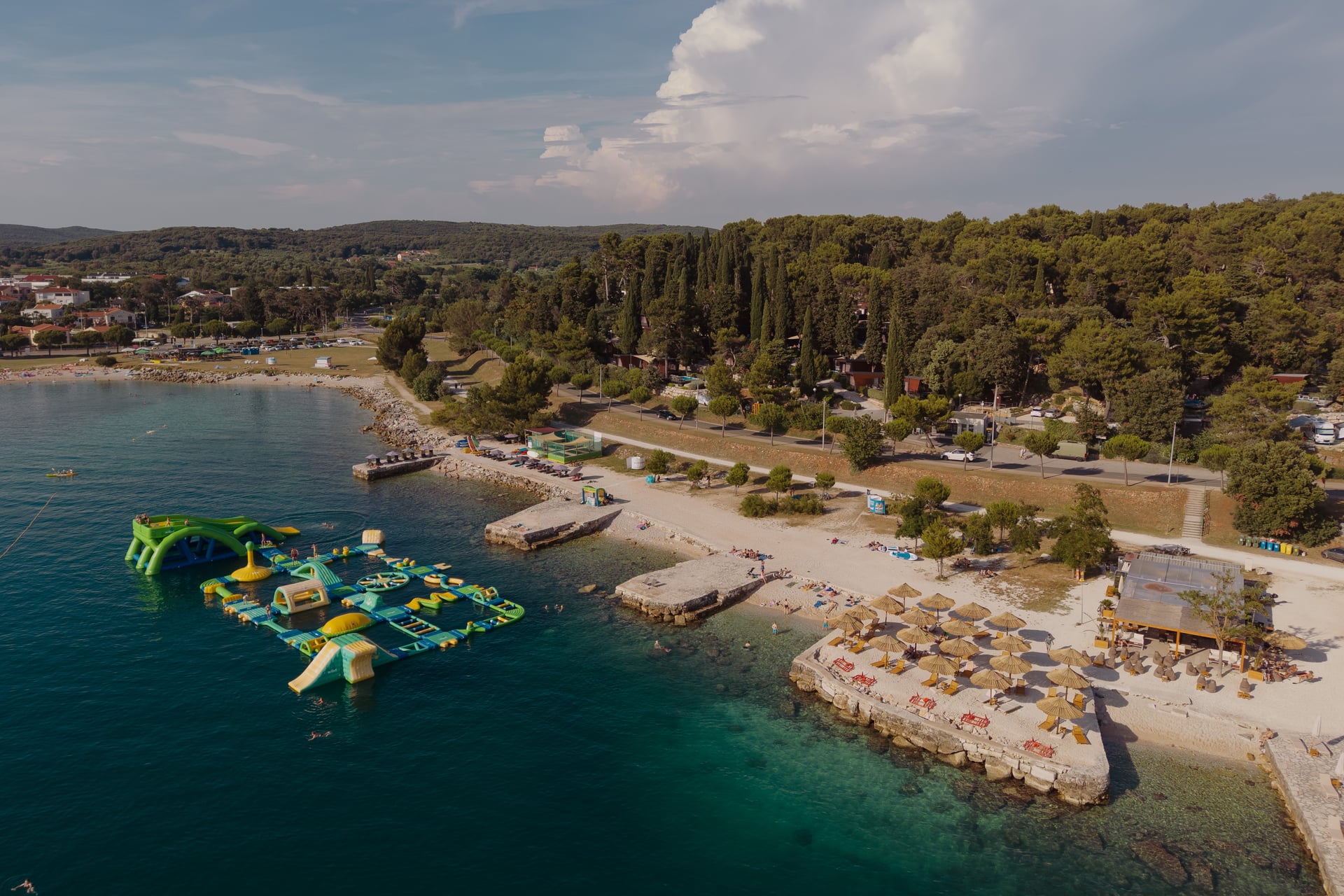
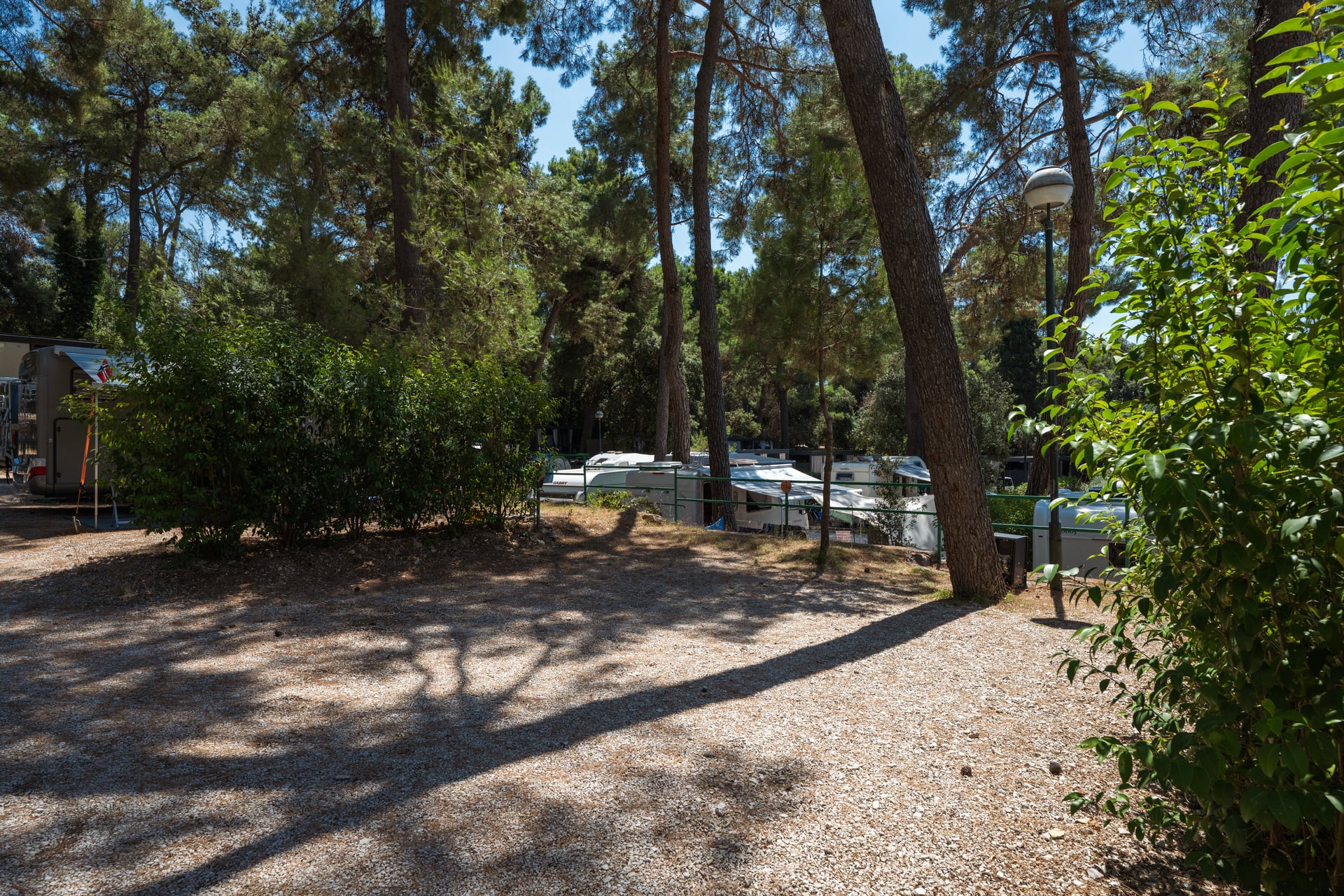
In search of a place in Istria that best embodies all the principles of a slow travel holiday, the Porton Nature Hideouts campsite, situated close to the magical town of Rovinj, is an unmissable destination. Porton represents a contemporary concept of a natural hideaway, designed specifically for guests seeking a balance between direct contact with nature and the high comfort of modern accommodation. The campsite is focused on preserving the natural environment, and the accommodation units are carefully arranged in the pleasant shade of tall pines. For fans of traditional camping, spacious pitches offer an authentic experience of sleeping under the starry sky and to the sound of the sea. Alternatively, for those who wish to sleep in complete comfort whilst retaining the feeling of being outdoors, Porton offers modern, designer mobile homes and exclusive Holiday Homes units, many of which come with their own private heated swimming pool. The architecture of these homes uses natural materials and clean lines to blend seamlessly with the surrounding greenery.
Located just a fifteen-minute stroll or a short cycle ride from the historic centre of Rovinj, Porton offers the perfect balance. It allows you to leave your car parked for the duration of your stay. You can start your morning with a fresh roll from the campsite, spend the day reading on the terrace or at the beach just a few minutes from your accommodation, and dedicate the late afternoon to a gentle stroll along the coast into town.
Porton provides an ambience that naturally encourages a minimalist approach to your holiday and a digital detox. In an environment dominated by the scent of pine needles, the rustle of wind in the treetops and the sight of the blue sea, the need to constantly check your mobile simply disappears. Here, it's easy to embrace the concept of a minimalist stay – you need very little when all the essentials (peace, nature, fresh air and good company) are already within reach.
Step by step: How to organise your own slow travel holiday
Switching from a traditional, hectic holiday to slow travel requires a small shift in mindset and preparation. Here are some practical steps to plan a stay that will truly rejuvenate you:
- Choose a base in nature: Find a location like Porton that offers peace, greenery, and close proximity to the sea or a forest, while also providing the comfort you need to feel at ease and safe.
- Keep your activity list to a minimum: Instead of a list of twenty must-see places, pick one or two things per week. Leave the rest of your time completely free for spontaneity.
- Plan to be car-free: When you arrive at your destination, explore the options for walking, hiring a bike, or using local trails. Getting around under your own power changes your perception of space and time.
- Set boundaries for technology: Agree with yourself (and your travelling companions) on periods during the day when mobile phones and computers are completely switched off. Use this time for conversation, reading, or simply observing your surroundings without distractions.
- Savour your meals without rushing: Turn every meal into a small ritual. Pick up fresh ingredients from a local market, prepare a simple meal on your accommodation's terrace, and savour every bite without checking the time.
Finding yourself by slowing down
A true slow travel holiday is not just a passing tourist trend – it is a much-needed return to the basic human needs for peace, quiet, nature, and authentic human contact. In a world that is constantly accelerating, choosing to slow down on holiday becomes an act of caring for your own physical and mental health.
Staying in a destination like Istria, and particularly in the natural setting provided by the Porton Nature Hideouts campsite, allows you to restore your disrupted balance, recharge your batteries with a deep sleep, and return to your daily routine truly rested, fulfilled, and inspired. The next time you're planning your week off, ask yourself: do you want to collect miles and locations, or do you want to create memories that will last a lifetime? The answer is in slowing down.
Gallery

Subscribe for our special offers
Subscribe to receive special offers and packages.