Blog
A short break in nature: an escape from the everyday in Istria
We often wait for our annual holiday for months, and when it finally arrives, we spend part of the time travelling, adjusting to a new rhythm and getting back to our daily routine. That's why we're increasingly appreciating the opportunity to simply get away from our familiar surroundings for a few days, change our pace and return home feeling more rested. Three or four days can be enough for such a break, especially when the destination isn't too far away and we're not trying to cram as many activities as possible into them. Instead of a long list of places to visit, we can focus on slower mornings, time spent outdoors, good food, walks, and time without a usual schedule.
This approach is particularly suited to those who don't need to travel far to feel a change, but simply a few days spent in a natural setting, near the sea and away from the usual noise, to briefly leave the everyday behind.
Why do short breaks mean more today than they used to?
The way we plan our leisure time is changing along with our lifestyles. Remote work, more flexible schedules and the ability to organise days off outside the traditional annual leave have opened up the possibility of more frequent trips that don't have to last a week or two.
Instead of the whole year revolving around one big holiday, days off can be spread out into several shorter breaks, although this way of planning doesn't mean you have to give up a longer annual holiday. Shorter breaks can complement it, especially during times when you feel the need for a change of scenery but don't have enough time for a longer trip. An extended weekend is particularly easy to organise in this regard. One extra day off can turn a few ordinary days into an opportunity to go to the seaside, spend time in the great outdoors, or explore a city you haven't yet discovered. It's even easier when your chosen destination is within easy reach.
The advantage of more frequent, shorter getaways isn't just that they're easier to fit into your schedule. They also allow you to use your time off outside the main tourist season, when destinations can look completely different from during the busiest summer months.
Instead of one big countdown to a year's holiday, the year can have several smaller highlights to look forward to. Each of these getaways doesn't have to be a special trip with a detailed itinerary, as it's the simplicity that allows the break to truly feel like a holiday.
What makes a short break truly restorative?
Not every trip is automatically a holiday, because if we fill a few days with long drives, constantly moving from one accommodation to another and a list of activities to tick off, it's possible to return home more tired than before we left. That's why, for a shorter stay, it's particularly important to choose a place that makes relaxing easier, rather than creating extra organisational hassle.
Proximity
When the aim is to relax in just a few days, the time spent travelling becomes an important part of the decision. The more accessible the destination, the more of your free time is left for the stay itself.
Proximity doesn't necessarily mean choosing the closest possible place, but rather finding a balance between the time it takes to get there and the feeling that you've truly changed your surroundings. Istria is appealing precisely because it combines the coast, nature, cities, gastronomy, and various opportunities for outdoor activities in a relatively accessible area, so for a short break, you don't need to travel far to experience something different. From Rovinj, it's about a half-hour's drive to Bale, while Motovun and the picturesque Istrian hinterland are roughly an hour away.
Nature as a trigger for tranquillity
Spending time in nature changes the experience of the day. Instead of indoor spaces, busy streets and constant commitments, time can be spent among the trees, by the sea or in the open air.
The combination of the sea and greenery is particularly appealing. A walk through a pine forest can be a completely different way to start the day compared to a morning spent in the city, while a few hours by the coast require no special planning. In the vicinity of Rovinj, numerous footpaths run along the sea and through Mediterranean vegetation, and many are also suitable for recreational cycling, allowing you to spend most of the day in the fresh air without long excursions.
Nature doesn't have to be an extra activity to fit into your schedule. When your accommodation is already surrounded by greenery, being outdoors becomes a natural part of your daily routine. Fewer decisions – one rhythm
A few days' holiday works best when we don't try to make every day as packed as possible. On the contrary, being away from home can be an opportunity to reduce the number of decisions we would otherwise make from morning to night.
You don't need to plan where you'll be every hour. It's enough to know where you'll be sleeping, where you can get a bite to eat, and what activities are nearby. The rest of the day can unfold spontaneously.
One place and one pace can be enough. A morning coffee, breakfast, a walk, a few hours by the sea, lunch and a rest already make up a day that doesn't need to be filled with anything else.
This approach is particularly useful when the reason for travelling is precisely the need for a break. If we take with us the same pressure to see and experience everything, it's difficult to make a real difference between travelling and everyday life.
Privacy and your own space
For a short break, the accommodation itself is also important. When you can return to your own space after an outing or a day spent outdoors, it's easier to carry on without needing to organise anything else.
A terrace, garden or outdoor seating area can become a place for morning coffee, reading or evening socialising. There's no need to go out again to continue enjoying the day.
Privacy is particularly important for those travelling with a partner, family or friends who want to combine time together with moments of peace and quiet. A well-chosen property is therefore not just a place to sleep, but part of the overall holiday experience.Amenities that remove the little worries
On a short trip, convenience is particularly valuable. When the essentials are close at hand, less time is spent on organisation, leaving more for relaxing.
Reception can facilitate your arrival and provide information about your stay, while a shop, bakery or other facilities on-site or nearby can cater for everyday needs without having to go into town. Parking is also an important detail for guests arriving by car.
These little things might not seem like a reason to choose a destination, but they can be the difference-maker when you only have a few days. The less time you have to spend on practicalities, the more room there is for the reason you came in the first place.
When to escape – the best times for a short break
A short break doesn't have to be reserved just for the summer months. Istria has plenty to offer outside the main season, and the time of year you travel can have a significant impact on the atmosphere you'll find.
Pre-season and post-season
May, June, September and October can be appealing for those who want to explore without feeling that their entire holiday has to be adapted to the summer crowds. In these months, the emphasis can be on walking, excursions, exploring cities and being outdoors.
The pre-season and post-season are particularly suitable for those for whom spending the entire day on the beach is not the main priority. Instead, the day can be split between nature, local attractions, food, and relaxation, for example during a short break that includes a long weekend.
It is worth checking the availability of specific facilities and accommodation options, as these can vary depending on the time of year, but they can be well worth considering even outside the main season.
Long weekends
A long weekend in Istria can be a simple opportunity to escape the daily routine. It doesn't require extensive planning, and the extra day off provides enough time to ensure the trip is more than just a journey there and back.
Instead of trying to see the whole region in a few days, it's better to choose one base and a few activities nearby. This way, there's enough time for spontaneity and relaxation.
A good plan can be simple: arriving on the first day, exploring the surroundings on the second, an excursion or a walk on the third, and a more relaxed morning before you head home. If the opportunity for an extra day arises, you can slow the pace down even more.
Midweek - the quietest and often the most affordable time
For those who can take their time off flexibly, midweek can be an interesting alternative to the weekend. Fewer people at certain locations can mean a quieter stay, and some accommodation outside of peak periods may have different booking conditions and prices.
This is particularly useful when the goal is to break away from the usual routine. Instead of waiting for Friday, a few days off from Tuesday to Thursday can create the feeling that you have briefly changed the entire pace of your life in the middle of the working week.
Istria as a destination for a short break
Istria is an appealing destination for a short break because it offers a variety of experiences in a relatively small area. The sea and coastline can be combined with historic towns, nature, gastronomy, and easy day trips.
For a long weekend in Istria, it's particularly convenient that you don't have to change location every day. One place can serve as a base from which you can spend some of your time in the surrounding area, and the rest simply enjoying the accommodation itself.
Accessible from Zagreb, Ljubljana, Trieste and Graz
For guests from Croatia and neighbouring countries, Istria is also appealing due to its transport accessibility. Zagreb, Ljubljana, Trieste and Graz are connected by road to the Istrian region, so the journey can be arranged by car without the need for a long international flight. By car, it typically takes approximately three hours to get to Rovinj from Zagreb, about two and a half hours from Ljubljana, and roughly an hour and a half from Trieste. The journey from Graz takes approximately four to five hours, depending on the route taken and traffic conditions. This is particularly important if you only have a few days off. For many travellers, a long weekend in Istria is a practical choice, as a car offers greater flexibility in planning your departure, return journey, and exploring the surrounding area.
However, it is worth checking current road conditions, journey times and potential traffic congestion before you travel, especially during weekends and public holidays. During the summer months, extra time may be needed on the approaches to tourist resorts and at the border crossings with Slovenia when checks are in place.
Rovinj – a city to explore on foot
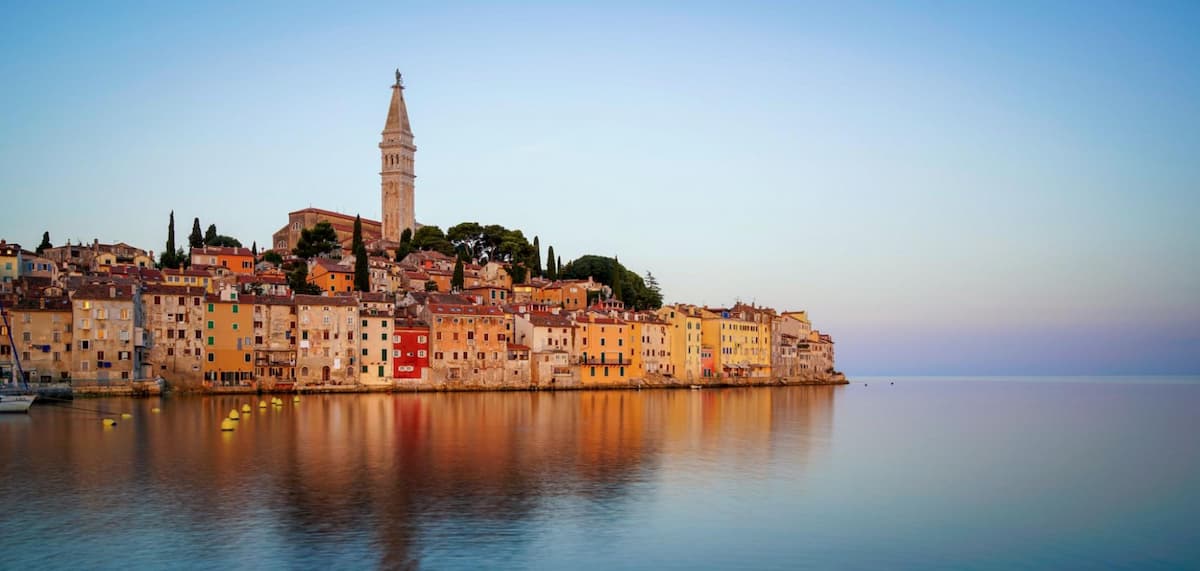
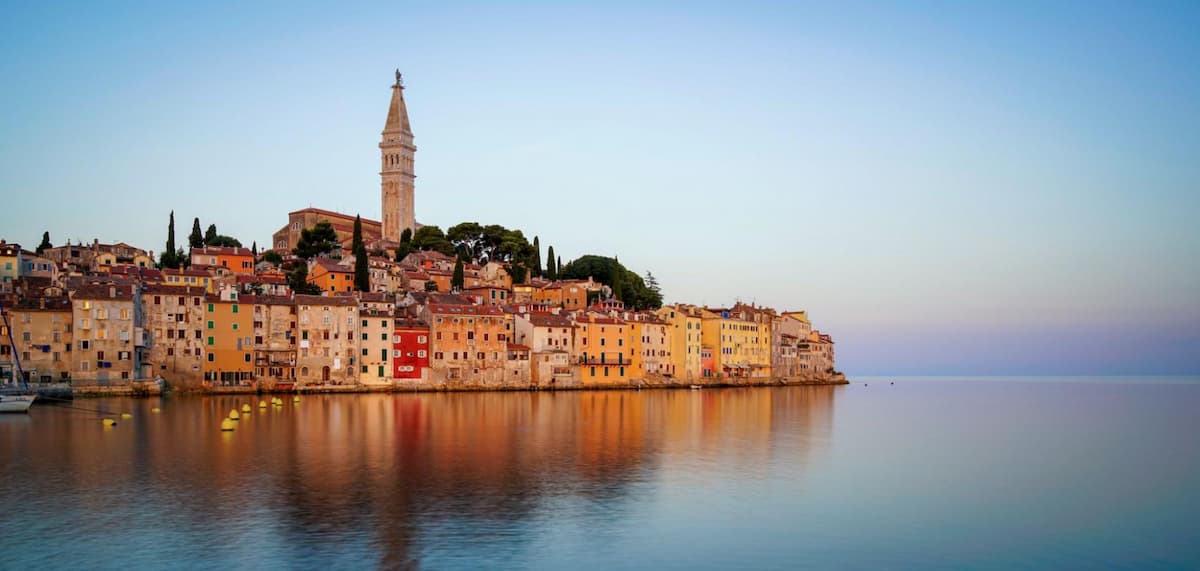
Rovinj is one of the most charming Istrian towns, ideal for a day trip or a relaxing afternoon by the sea. You can start your walk along the picturesque waterfront, then climb through the narrow, stone streets of the old town centre to the Church of St. Euphemia, from where there is a magnificent view of the sea and the surrounding islands.
Along the way, it's worth stopping by the small art galleries, exploring the shops selling local products, and strolling down the famous Grisia Street. As the old town is built on a hill with numerous cobbled streets and steps, it is best to wear comfortable shoes. A leisurely stroll around the town, with a few stops along the way, will take at least two to three hours.
For a break from the hustle and bustle of the city, there is the Zlatni Rt park forest, with its paved paths, pine forest and numerous spots for relaxing by the sea. It is located south of the old town, and besides walking, it offers opportunities for cycling and spending time on the rocky or shingle parts of the coast.
Sea, pine trees and a mild Mediterranean climate outside the peak season
Istria is particularly appealing in spring and autumn, when the coastal towns are quieter and the temperatures are more pleasant for exploring nature and spending longer periods outdoors. Without the large summer crowds, this is the ideal time to discover its coast, picturesque inland villages, and rich gastronomic offerings.
Adventure enthusiasts can explore numerous hiking and cycling trails or head to the Limski Channel, approximately a half-hour's drive from Rovinj. It is known for its steep, green slopes and oyster farms, and a visit can be combined with tasting fresh oysters and mussels in local restaurants. For a slightly different day trip, it's worth visiting Motovun or Grožnjan, two picturesque towns on the hills overlooking the Istrian landscape. Motovun is particularly interesting for its medieval core and the view over the Mirna river valley, while Grožnjan is known for its art galleries and small studios.
And when the weather calls for a slower pace? A visit to a local winery, an olive oil tasting, or lunch in a traditional Istrian konoba are an excellent way to get to know the region through its flavours. Autumn is particularly interesting due to the truffle season, while spring brings a greener landscape and pleasant conditions for excursions. In the numerous Istrian wineries and olive oil producers, you can arrange guided tastings, for which it is advisable to book in advance, regardless of the time of year.
The weather in the transitional months can be changeable, so it's a good idea to leave some flexibility in your planning. Use the sunny days to explore the coast and nature, and the rainier ones for gastronomy, wellness, or simply relaxing in your accommodation. What can you fit into three days, and what should you save for next time?
Three days isn't too short if you accept from the outset that you don't have to see all of Istria. It's best to use them for a few carefully chosen experiences, rather than trying to tick off a long list. A short break can be perfectly fulfilling without visiting a large number of locations.
The first day can be reserved for arriving and getting to know your accommodation. You can dedicate the second to Rovinj and a leisurely stroll, with plenty of time for lunch and a rest. The third day can be an opportunity for a short trip to the surrounding area or simply a few more hours spent in nature.
If you stay for another day, you don't necessarily have to add more locations. The extra day can be used for what is often missing on shorter trips: a free morning, a slower breakfast, a longer walk, or a few hours with no plan at all.
This approach also changes the question of what it means to make the most of a trip. The goal isn't to return home with a list of all the places you've visited, but with the feeling that you've at least briefly stepped away from your daily routine.
A short break that doesn't require much planning
A good escape from the everyday doesn't have to be a major undertaking, because when the destination is close enough, the accommodation is comfortable, and amenities are available, a few days off and a short break can be enough for a real change of pace.
Istria, in turn, offers a combination that suits this very style of travel: the sea, nature, towns, and the option to decide for yourself how many days to fill with activities and how many to leave free.
For those who want to combine a stay in nature with comfort, Porton Nature Hideouts in Rovinj offers various types of accommodation, from pitches for guests with their own equipment to mobile homes and Holiday Home cottages. You can find more information about the available accommodation options at Porton Nature Hideouts.
If you're thinking about how to spend a long weekend in Istria, you can choose a few simple activities and leave plenty of room for spontaneity, because sometimes just a few days are enough to do what we rarely find time for in our daily lives: slow down, get away from screens, take a leisurely stroll and spend a day without constantly checking the clock. Not every trip has to be a grand journey, because some of the best breaks begin with the simple decision to change scenery for a few days and let the day unfold a little more slowly.
Gallery


Subscribe for our special offers
Subscribe to receive special offers and packages.